

The Need to Protect Risk-Takers
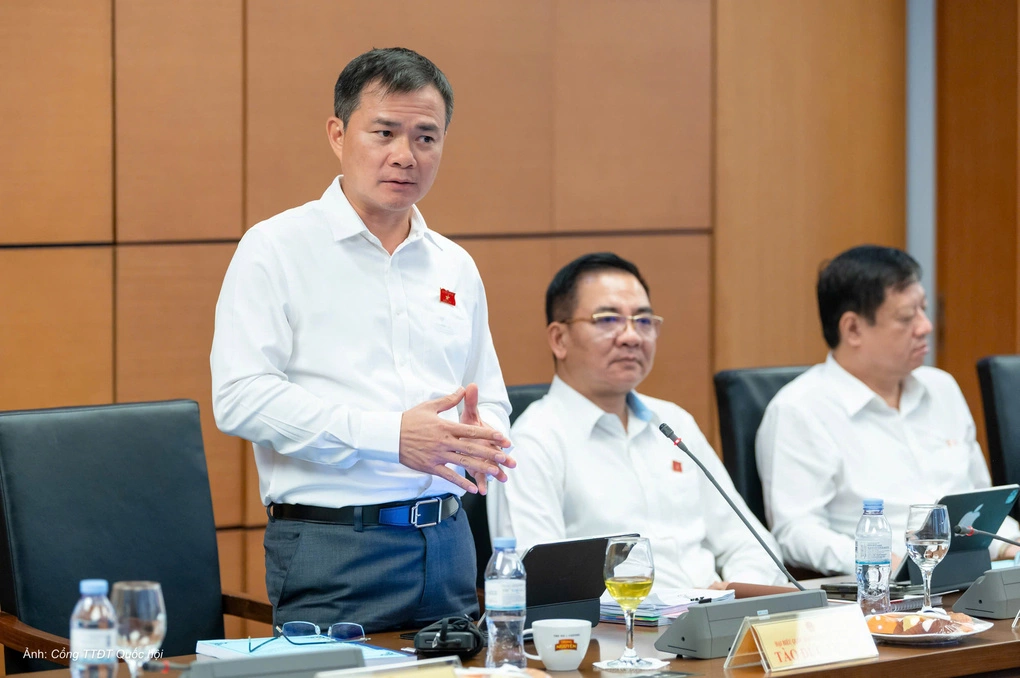
Major General Tao Duc Thang, Chairman and CEO of Viettel Group, highlighted that research and innovation naturally involve objective risks, such as natural disasters or economic fluctuations. He stressed that a robust legal corridor is essential to protect bold entrepreneurs and businesses willing to take initiative.
Reviewing Article 5 of the draft resolution, Mr. Thang expressed concern over provisions requiring investment and technology projects to be “fully completed and yield socio-economic efficiency” before receiving special policy support. He argued that this condition is overly narrow and disconnected from practical business realities, where risks are inevitable.
To address this, he proposed broadening regulations to cover projects that fail to meet initial targets due to objective factors, provided that units take timely mitigation steps or absorb losses through overall business profitability. This approach aligns with broader state economic development guidelines, which evaluate outcomes across entire stages rather than isolated components.
Concepts Refinement and Independent Council Establishment
Professor Nguyen Vu Trung, Director of the Pasteur Institute in Ho Chi Minh City, supported the draft’s core philosophy of protecting “reasonable risks” while rejecting intentional violations. However, he recommended clarifying several concepts.
Specifically, he noted that defining “the common interest” to include corporate interests could inadvertently justify almost any business decision. He argued that public interest must be assessed based on the information, conditions, and context at the time of the decision, rather than hindsight.
To handle complex technology cases, Professor Trung proposed establishing an independent advisory council comprising economic, financial, technological, and legal experts. While this council’s conclusions would not replace judicial decisions, they would serve as mandatory expert references to protect innovators, investigators, prosecutors, and judges alike.
A Transitional Step Forward
Le Minh Tri, Head of the Central Internal Affairs Commission, emphasized that the resolution’s primary goal is reducing criminal penalties to give creators peace of mind and drive development. Because technology evolves faster than the law, the draft includes provisions for “risk-sharing” and “tolerance of failure” to encourage innovation without corruption.
Intended as a 2-3 year transitional measure, this special resolution addresses immediate practical hurdles. Afterward, the government plans to comprehensively refine criminal, anti-corruption, and investigative laws to provide long-term security for professionals executing new policies.
Discover more from Vietnam Insider
Subscribe to get the latest posts sent to your email.