

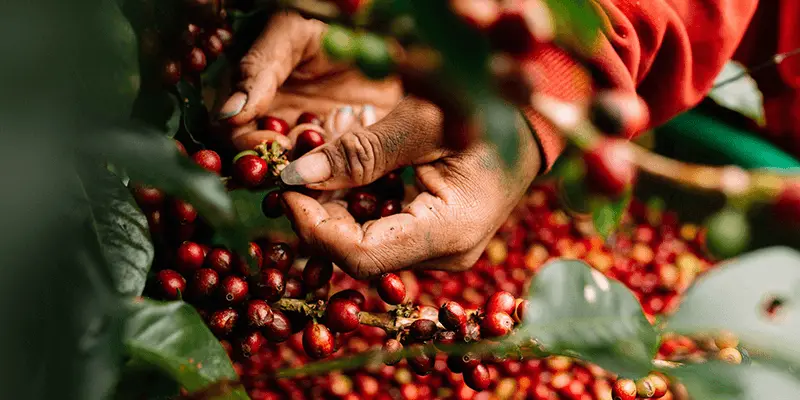
Deep processing and value addition are driving the transformation of Son La’s coffee sector, where Arabica represents the principal cash crop. In 2026, the northern mountainous province cultivates roughly 44,000 hectares of coffee, with annual green bean output projected at 50,960 metric tons across some 50 communes and wards. Key production hubs encompass Mai Son, Chieng Mai, Chieng Mung, Thuan Chau, Chieng La, Muoi Noi, Binh Thuan, Sop Cop, Song Ma, and Muong Chanh, alongside urban wards such as Chieng An, Chieng Cơi, Chieng Sinh, and To Hieu.
Crucially, the product is protected under the “Son La Coffee” Geographical Indication (GI), anchored by dedicated high-tech agricultural zones, specialty-grade cultivation, and internationally verified sustainable supply chains.

Mr. Vuong Van Hai, Chairman of the Son La Coffee Association, outlines key strategic solutions to enhance the commercial value of Son La coffee.
Speaking with Vietnam Economic News, Mr. Vuong Van Hai, Chairman of the Son La Coffee Association, noted that regional output has progressively shifted from raw bulk commodity exports to high-grade beans, advanced secondary processing, and product diversification. The province currently sustains over 1,100 hectares of specialty coffee yielding roughly 1,000 tons of high-grade green beans annually, supported by two certified high-tech agricultural zones in Mai Son and Thuan Chau spanning more than 1,000 hectares.
Beyond domestic retail distribution, Son La coffee has established foothold shipments across the European Union, North America, the Middle East, and ASEAN markets.
The Association Chairman emphasized that modern discerning consumers look beyond sensory flavor alone, prioritizing traceability, farming methods, food safety, ecological footprints, and fair compensation for smallholder farmers. The strategic orientation must therefore transition from simply having raw beans to sell toward delivering high-value products tailored to consumer demand.
As a primary collector and processor in the province, Cat Que Production and Trading Co., Ltd. (Son La Branch) has invested in modern processing lines while transferring advanced farming techniques, raw material quality control, and post-harvest protocols to local outgrowers to meet export benchmarks.
Mr. Pham Thang, General Director of the company, indicated that investing in deep processing serves as an essential pathway to diversify product lines, expand target market reach, and scale commercial order volumes. This structural upgrade steadily optimizes export margins while elevating the broader visibility of the Son La coffee brand among domestic and international commercial partners.
Forging a Benchmark Brand Across ASEAN
Mr. Nguyen Duc Thang, Vietnam Secretary-General of the ASEAN Retail-Chains & Franchise Federation (ARFF), underscored that market penetration must hinge on verified quality, rigorous origin tracking, direct commercial buyer linkages, and test-marketing trial batches. ARFF aims to assist domestic producers in engaging international green bean importers, specialty roasters, retail distribution channels, and global coffeehouse franchises.
The priority involves forming core consortiums of leading enterprises and cooperatives to standardize quality specs, physical sample presentation kits, and detailed batch dossiers covering micro-region terroir, crop harvest year, primary processing method, cupping scores, volume capacity, and delivery timelines. Alongside green beans, trial marketing of roasted coffee, drip filter bags, and premium gift sets should be deployed to drive brand equity and enhance unit margins.
For the Chinese market, commercial-grade volumes should target Guangdong, starting with Guangzhou, while specialty and microlot lines target Shanghai’s high-end cafe scene. In Japan, efforts should prioritize connections with artisanal roasters and wholesale distributors, alongside exploring strategic acquisitions of regional coffee facilities or firms.

Mr. Nguyen Duc Thang discusses strategic frameworks to establish Son La Arabica as a signature ASEAN coffee brand in foreign markets.
Within the EU, Hamburg is recommended as a central transshipment hub for import logistics and roasting, while Poland offers an entry point for Central and Eastern European distribution. Initial entry should proceed through sample distribution, cupping sessions, and pilot consolidations, supported by complete food safety dossiers, batch tracking, and direct compliance with the European Union Deforestation Regulation (EUDR) detailing stakeholder roles and implementation timelines.
For long-term green bean sourcing, exploratory surveys in Houaphanh and Xiangkhouang—drawing on production models from Laos’s Bolaven Plateau—can establish supply partnerships with Lao farmers and firms. Any sourced Lao coffee must maintain clear traceability and distinct country-of-origin labeling, strictly separate from the Son La brand identity.
Logistically, coordinated routing with Viettel Post is proposed to consolidate freight from Son La through Viettel Logistics Park Lang Son to the China-ASEAN Agricultural and Fruit Trading Center in Pingxiang, clarifying freight routes, handling fees, customs clearance protocols, cold-chain storage, and contractual liabilities.
Concurrently, stakeholders should introduce multilingual trade catalogues, QR-enabled lot tracking, and e-commerce trials to monitor customer acquisition from sample delivery to initial transaction. Collaborations with the Vietnam University of Fine Arts can develop dedicated visual identities, export packaging, and origin storytelling. Brand outreach will leverage Vietnamese overseas diplomatic missions, trade promotion bodies, certified Q-graders, and commercial roasters. “ARFF is committed to helping Son La Arabica systematically emerge as a premier coffee brand representing ASEAN in global markets,” Mr. Thang noted.

Son La coffee products continue expanding across domestic retail and overseas export channels.
Regarding entry into the United Kingdom, Mr. Le Dinh Ba, Commercial Counselor at the Vietnam Trade Office in the UK, advised Son La exporters to prioritize professional roaster networks by presenting uniform cup profiles, verified consistency, and transparent origin profiles.
“Enterprises and cooperatives must highlight distinctive product attributes, supply volumes, price structures, and delivery lead times. Narratives surrounding growing regions, local farmers, and brand development carry far greater weight when accompanied by physical sample evaluation,” Mr. Le Dinh Ba shared.
To structurally enhance crop value at the provincial level, the Son La Coffee Association Chairman stressed the need for unified solutions: selecting and propagating disease-resistant, high-cup-score cultivars suited to local soils; training growers in organic fertilizer application, regulated irrigation, 100% ripe cherry harvesting, and technical processing. Establishing contiguous production zones under centralized oversight will reinforce origin authenticity.
Looking ahead, the Association will assist farming households, cooperative alliances, and commercial processors in obtaining international sustainability certifications. Meeting these audit standards opens pathways into high-paying specialty markets while generating price premiums of 15% to 30%.
In tandem with quality improvements, developing agritourism across local coffee farms—integrated with Northwest ethnic coffee culture—is expected to elevate regional destination appeal, create direct-to-consumer sales channels, and bolster overall economic value for Son La Arabica.
Source: congthuong.vn
Discover more from Vietnam Insider
Subscribe to get the latest posts sent to your email.