

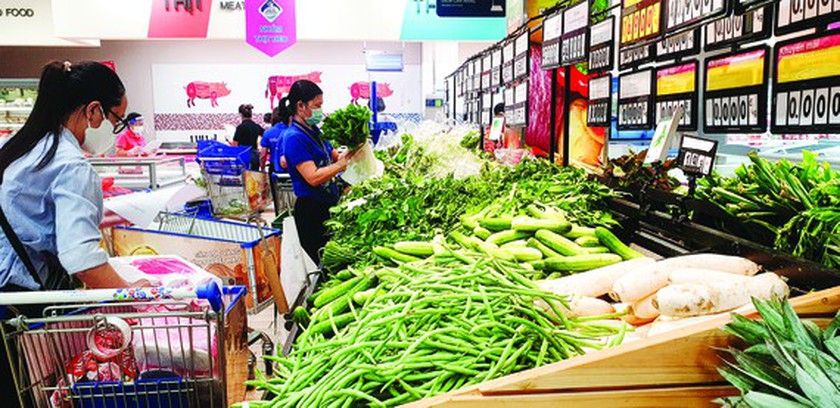
For many Vietnamese households, inflation is no longer something measured by economic reports or government statistics. It is being felt every morning in a bowl of noodles, a cup of coffee, a ride to work, or a delivery arriving at the front door.
Across Ho Chi Minh City and other major urban centers, a steady rise in everyday expenses is quietly reshaping household budgets, forcing consumers to spend more while receiving essentially the same goods and services.
The increases often appear small in isolation.
A bowl of noodle soup that costs an extra VND5,000. A coffee priced VND5,000 higher than last year. A ride hailing trip that becomes slightly more expensive. A laundry service that adds another VND20,000 to the bill.
Yet when combined over weeks and months, these seemingly minor adjustments can add millions of dong to a family’s annual living expenses.
For office worker Hong in Ho Chi Minh City, the impact has become impossible to ignore.
A simple breakfast and takeaway coffee that once cost between VND60,000 and VND75,000 now approaches VND100,000. The difference may appear modest on a single day, but over the course of a month it represents a noticeable increase in spending.
“Each item only goes up a little,” she said. “But when everything rises at the same time, it adds up very quickly.”
The trend extends well beyond food.
Restaurants, coffee shops, hair salons, gyms, beauty services, laundries, delivery companies, and ride hailing platforms have all adjusted prices upward in recent months as businesses grapple with rising operating costs.
Many food vendors report paying more for meat, vegetables, cooking ingredients, labor, electricity, rent, and transportation. Service providers face similar pressures from higher wages, utility costs, logistics expenses, and regulatory compliance requirements.
As a result, businesses are increasingly passing those costs on to consumers.
The phenomenon reflects a broader shift occurring throughout Vietnam’s economy.
According to official statistics, consumer prices increased by more than 4 percent during the first five months of the year. Housing, utilities, transportation, and food services all recorded significant increases.
Yet economists note that many consumers perceive inflation as being much higher than official figures suggest.
That disconnect exists because people do not experience inflation through statistical baskets of goods. Instead, they experience it through daily purchases.
When a meal increases by VND10,000 or a coffee rises by VND5,000, the change feels immediate and tangible. Businesses also tend to round prices up in visible increments, making cost increases more noticeable than broader inflation data might imply.
The result is a growing sense among consumers that everyday life is becoming more expensive.
At the same time, not every business has chosen to raise prices.
Some small family operated establishments continue absorbing higher costs to retain loyal customers. In Ho Chi Minh City, certain neighborhood eateries have maintained the same menu prices for years despite substantial increases in ingredient costs.
For these businesses, preserving affordability is often a conscious decision aimed at protecting long standing relationships with local communities.
However, economists warn that such strategies may become increasingly difficult to sustain.
As input costs continue rising across multiple sectors, maintaining stable prices could become financially unsustainable for many small enterprises.
For consumers, the challenge is equally complex.
Unlike sudden economic shocks, today’s cost of living pressures are emerging gradually. No single price increase is dramatic enough to trigger alarm, but together they are steadily reshaping spending habits, savings goals, and household financial planning.
The experience mirrors a broader trend seen in cities around the world, where inflation has eased from recent peaks but the overall cost of living remains significantly higher than before.
For Vietnam’s growing middle class, the question is no longer whether prices are rising.
It is how much further they will rise, and how households can adapt to a reality where even the most ordinary daily routines are becoming increasingly expensive.
Discover more from Vietnam Insider
Subscribe to get the latest posts sent to your email.