

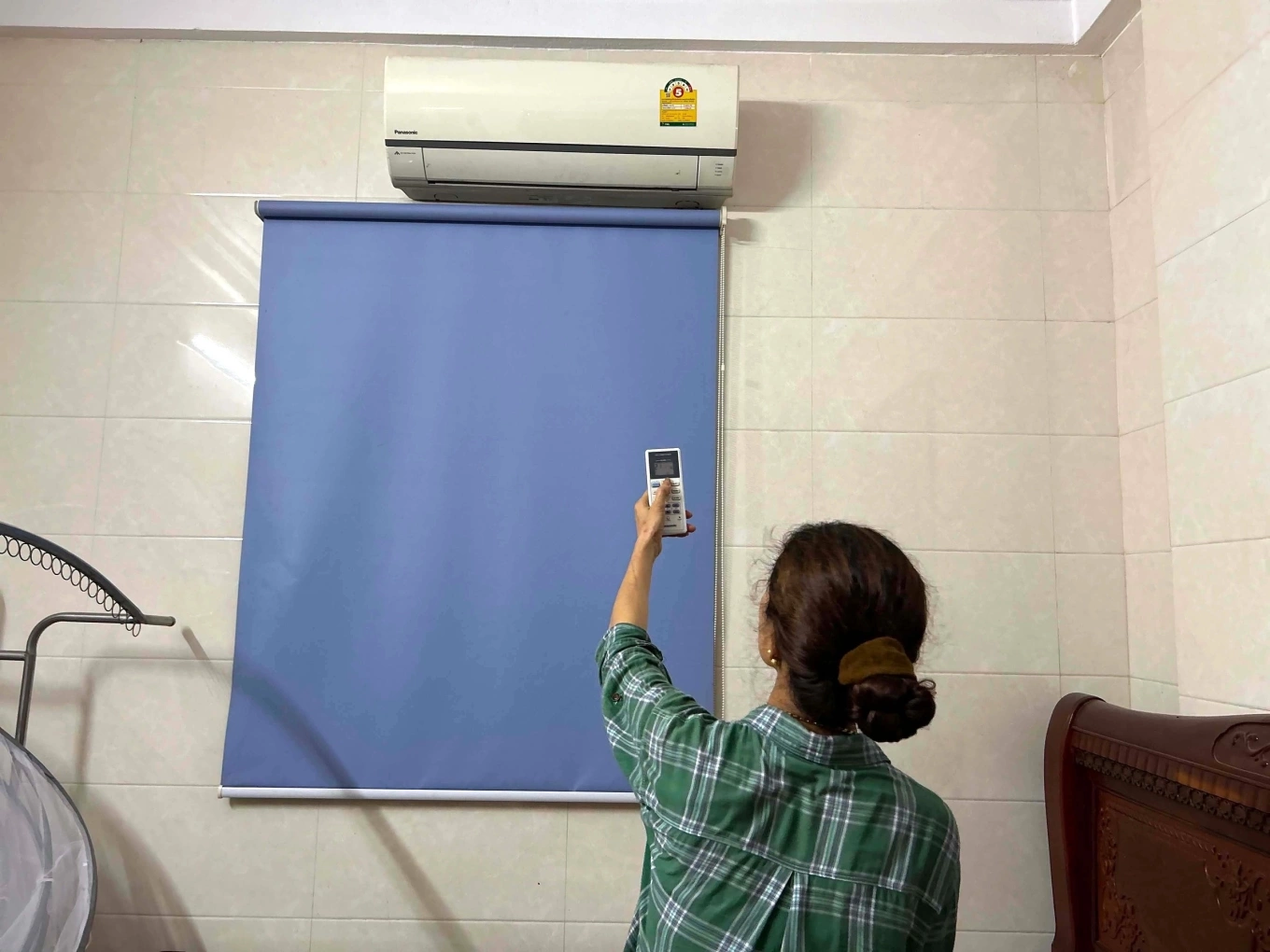
As temperatures soar across Vietnam this summer, a growing number of households are facing an unexpected challenge: keeping cool without blowing their budgets.
With electricity bills surging alongside record breaking temperatures, families across the country are finding themselves caught between comfort and cost. For some, the financial strain is becoming a source of tension at home, exposing deeper anxieties about household finances, rising living expenses, and economic uncertainty.
For 65 year old Thuy Ha in Hai Phong, the shock came in the form of a text message.
Her family’s electricity bill for May reached VND4 million (US$150), more than triple their typical monthly spending. Despite using a solar powered water heater and traditionally keeping utility costs low, a combination of school holidays and an intense heatwave meant four air conditioners were running almost continuously.
The increase consumed more than half of her monthly pension.
Faced with the unexpected expense, Ha imposed strict energy saving measures. Family members were required to gather in a single air conditioned room, while the remote controls for other units were hidden away. Meals became simpler, and weekends increasingly meant escaping to shopping malls where air conditioning came free of charge.
The strategy reduced electricity consumption, but it also created new sources of frustration. Children struggled to find quiet places to study, while other family members complained that the restrictions had become excessive.
Similar stories are emerging across Vietnam.
In Nghe An Province, a VND5.6 million electricity bill became a source of disagreement between a couple already balancing the financial demands of a multi generational household. While one family member prioritized comfort for elderly relatives during the heatwave, another worried about the impact on monthly finances.
The debate reflects a broader dilemma facing millions of households during increasingly extreme weather conditions.
Northern Vietnam experienced temperatures approaching 43 degrees Celsius in late May, driving electricity demand to record levels. According to power authorities, peak consumption surged nearly 30 percent compared with the same period last year, with several provinces recording particularly sharp increases.
As air conditioners run for longer periods and more households seek relief from the heat, electricity costs have become a growing concern for many middle income families.
The issue extends beyond utility bills.
Experts say rising energy costs are increasingly intersecting with broader economic pressures, including housing expenses, childcare costs, and inflation concerns.
Psychologists note that household arguments over electricity usage rarely stem from power consumption alone.
Instead, they often reveal underlying financial stress and disagreements over how families should allocate limited resources.
“When there is insufficient communication and understanding, the burden carried by the person managing household finances can become a source of conflict,” one psychologist explained.
Financial analysts make a similar observation.
Families that operate without emergency savings or seasonal expense planning are often more vulnerable to sudden increases in utility costs. During periods of extreme weather, those pressures can quickly translate into household tensions.
At the same time, experts caution against overreacting.
Some households have responded by drastically restricting air conditioner use, while others have rushed to consider expensive solar energy installations without fully evaluating the financial return on investment.
Instead, specialists recommend a more balanced approach that combines energy efficiency with long term budgeting.
Simple measures such as setting air conditioners at 26 degrees Celsius, improving insulation, using fans to supplement cooling, and creating dedicated seasonal savings funds can help reduce pressure without sacrificing comfort.
That is the approach adopted by 25 year old Hanoi resident Thuy Trang and her husband.
After arguments emerged over the family’s growing electricity bill during her maternity leave, the couple agreed to set aside a dedicated monthly fund to cover higher summer energy costs. The arrangement allowed them to continue using cooling appliances while avoiding disputes over household spending.
“There is no choice but to adapt,” Trang said.
Her experience reflects a reality that many Vietnamese families may increasingly face in the years ahead. As climate change contributes to hotter summers and energy demand continues to rise, managing electricity costs is becoming not only an economic challenge but also a social one.
For many households, staying cool may now require more than just air conditioning. It may also require careful planning, communication, and compromise.
Discover more from Vietnam Insider
Subscribe to get the latest posts sent to your email.