

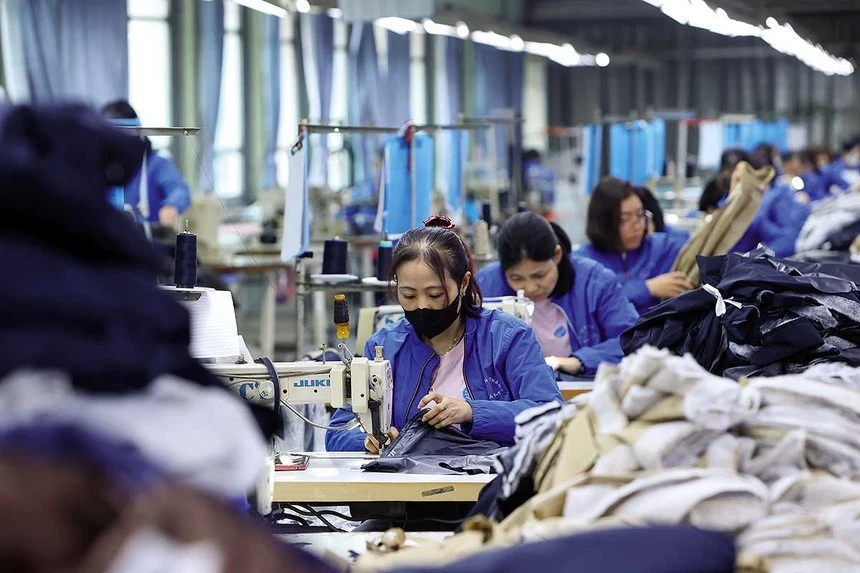
According to a White House Memorandum dated July 23, 2026, the USTR is investigating Vietnam alongside 59 other economies under Section 301. As a result, goods originating from Vietnam face a 12.5% tariff. However, products listed in the Memorandum’s Appendix remain exempt.
Broader Risks Across Global Supply Chains
Notably, the Memorandum emphasizes items made “wholly or in part” using forced labor. Consequently, supply chain risks extend far beyond final assembly. They can stem from raw materials, components, or any production stage.
The document also outlines a tariff-rate quota for certain textiles tied to US cotton. This measure aims to limit reliance on high-risk inputs. In addition, it reflects a global shift toward stricter input origin standards.
Vietnamese officials clarify that the US document mandates no single traceability protocol. Nevertheless, exporters must provide reliable data regarding material sources, suppliers, and factories to prove compliance.
The US applies a 12.5% tariff on goods originating from Vietnam, excluding products listed in the Memorandum’s Appendix.
High-Risk Sectors Facing Strict Scrutiny
These requirements especially impact industries with complex, multi-tiered supply chains. Affected sectors include textiles, footwear, electronics, energy, electrical equipment, semiconductors, minerals, and farm goods.
In the textile sector, firms must trace beyond cutting and sewing. They need to verify the origins of cotton, yarn, fabric, dyes, and accessories.
Similarly, electronics and energy companies must oversee components, semiconductor materials, batteries, solar panels, and critical raw inputs.
Key Actions Exporters Must Take Immediately
To address US policy shifts and Circular 31 rules, businesses must quickly upgrade supply chain traceability.
Officials note that US forced labor target lists do not fully align with Vietnam’s high-risk list. For instance, local rules label many textiles as medium risk, while some fuels rank as high risk. Furthermore, domestic regulations do not class all cotton, semiconductors, solar panels, and batteries as high risk.
Regardless of local classifications, companies must trace raw inputs deeply whenever buyers request it.
Practical Steps for Risk Management
To protect their trade, exporters should immediately take concrete actions across their operations. First, companies need to map supply chains to identify both direct and tier-N suppliers. They must also retain detailed records of material sources, production sites, and shipping logistics.
In addition, firms should categorize suppliers by risk level and perform extra audits on flagged sources. Standardizing traceability data by product, batch, lot, or serial number is equally essential.
Furthermore, businesses must enforce origin controls to prevent illegal transshipment or simple relabeling. Inserting strict traceability and labor clauses directly into supplier contracts helps solidify compliance.
Finally, enterprises should designate response teams to handle verification requests quickly. Slow or inconsistent records increase the risk of custom detentions or rejections. Traceability is no longer just a compliance task; it is a vital tool for risk management. Early preparation and honest data reporting ensure smooth market access and safeguard the reputation of Vietnamese goods.
New Ministry Framework on Product Traceability
On June 11, the Ministry of Industry and Trade issued Circular 31 regarding product traceability. The rule applies mandatorily to high-risk items, while encouraging voluntary use for other goods.
Under this circular, merchants can declare data directly on the Ministry’s central portal or create internal tracking systems. Internal setups must share data smoothly with the central system while upholding cybersecurity standards.
Ultimately, the central system receives, stores, and manages merchant data. It also generates lookup codes to link information seamlessly.
Discover more from Vietnam Insider
Subscribe to get the latest posts sent to your email.