

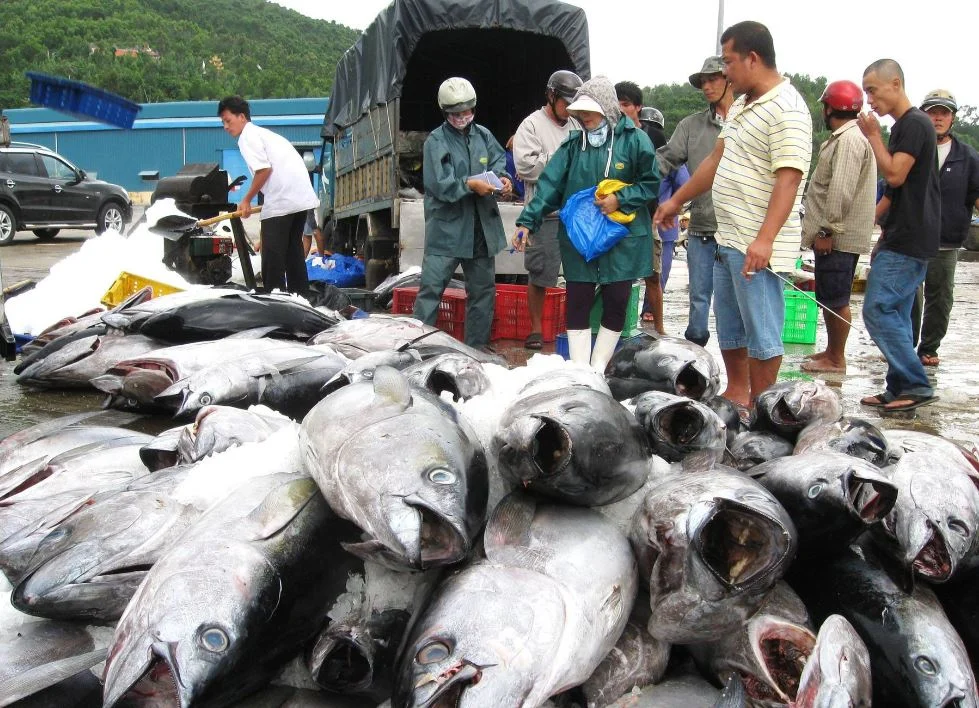
According to data from the Vietnam Association of Seafood Exporters and Producers (VASEP), seafood exports across the entire sector reached nearly 1.02 billion USD in July 2026, marking a 4.8% increase compared to the same period in 2025.
Cumulative exports for the first seven months hit nearly 6.78 billion USD, up 11.5%. Surpassing the 1-billion-USD mark in July further reinforces the prospect that full-year seafood exports could exceed 12 billion USD. However, the July figures also send a clear signal that the most favorable growth phase may have already passed.

Source: Dan Viet Newspaper

Source: VnEconomy
Regarding tuna, exports in July reached over 69 million USD, a slight decrease of 0.1%. Cumulative exports for the first seven months reached nearly 524 million USD, down 1.4%.
By market breakdown, as of the end of June, Vietnam’s tuna exports to the United States reached over 176 million USD, down 2.3% year-on-year. The U.S. remains the largest market, accounting for nearly 39% of Vietnam’s total tuna export turnover.
Monthly trends indicate that the market remains unstable. Exports declined continuously in the first five months of the year before surging by nearly 100% in June, reaching nearly 35.9 million USD. Part of this spike was largely driven by importers pushing for early shipments to hedge against policy risks.
Meanwhile, Canada is emerging as one of the bright spots for Vietnamese tuna. Specifically, Vietnam’s tuna exports to Canada reached nearly 20 million USD, up 5% compared to the same period in 2025. Canada is currently Vietnam’s sixth-largest tuna import market and stands out as a bright spot among markets participating in the Comprehensive and Progressive Agreement for Trans-Pacific Partnership (CPTPP), at a time when exports to the U.S. and the EU continue to experience volatility.

Source: Doanh nghiep hoi nhap Magazine
Monthly trends show a clear market recovery starting in the second quarter. Export values grew continuously month over month. The export value in the second quarter reached nearly 12 million USD, an increase of nearly 30%, making up for most of the decline seen in the first quarter. However, it is still too early to confirm whether the market has entered a stable growth cycle.
Product structures have also diverged. The HS03 group of fresh, frozen, and dried tuna reached nearly 14 million USD, down 6%. Meanwhile, the HS16 group of processed and canned tuna reached nearly 6 million USD, up 42%. Thus, the primary growth driver did not stem from frozen raw materials, but rather from processed products with higher added value.
Tuna is one of the seafood products with high commercial value thanks to its abundant nutritional content, making it a favorite among consumers in many markets. This fish provides a source of high-quality protein, containing about 24–30 grams of protein per 100 grams of flesh—equivalent to or higher than salmon—while containing less fat.
Additionally, tuna is rich in omega-3 fatty acids, vitamin D, vitamin B12, selenium, and many essential minerals, contributing to cardiovascular, brain, and immune system health. By meeting consumer trends favoring high-protein, low-fat, and convenient foods, tuna is playing an increasingly vital role in global seafood trade, especially in markets such as the U.S., the EU, and Japan.
Discover more from Vietnam Insider
Subscribe to get the latest posts sent to your email.