

The Hanoi People’s Committee submitted a formal proposal to the municipal People’s Council to establish a priority resolution for disadvantaged residents living in the capital’s historic core.
Under the draft proposal, the city offers voluntary social housing access to eligible residents in Hoan Kiem Ward without requiring them to enter typical allotment lotteries.
Eligible households or individuals can purchase or lease-purchase a single social housing unit from the designated municipal reserve. The city grants this benefit once per household.
To qualify, applicants must hold permanent residency and reside in the historic core of Hoan Kiem Ward before the council adopts the resolution. In addition, their current living space must fall below 5 square meters of floor space per person. Applicants must meet standard statutory criteria for social housing, register voluntarily, and receive approval from the ward People’s Committee.
Phased Allocations Across Commercial Social Housing Projects
Hanoi plans to allocate up to 902 social housing units across upcoming commercial developments. In 2026, the city aims to release 552 apartments across nine designated projects.
Selected project locations include Linh Nam, Dai Mo, Dan Phuong, Thach That, Vinh Hung, Me Linh, and Phuc Thinh. Participating developers will reserve up to 20% of their available units for this program.
City planners selected projects that feature convenient public transit links, prioritizing proximity to urban rail lines. The sites provide schools, healthcare clinics, traditional markets, and commercial zones. The layouts accommodate an average family size of four people.
Authorities must publish project details, including unit counts, apartment layouts, and construction timelines, before registration opens. Unclaimed units will return to the general social housing pool.
If applicant numbers exceed available units in a project, the city prioritizes households with the lowest per capita space. Priority also goes to families with seniors, persons with disabilities, impoverished and near-poor households, and early registrants. Remaining applicants will transfer to alternative projects within the municipal fund.


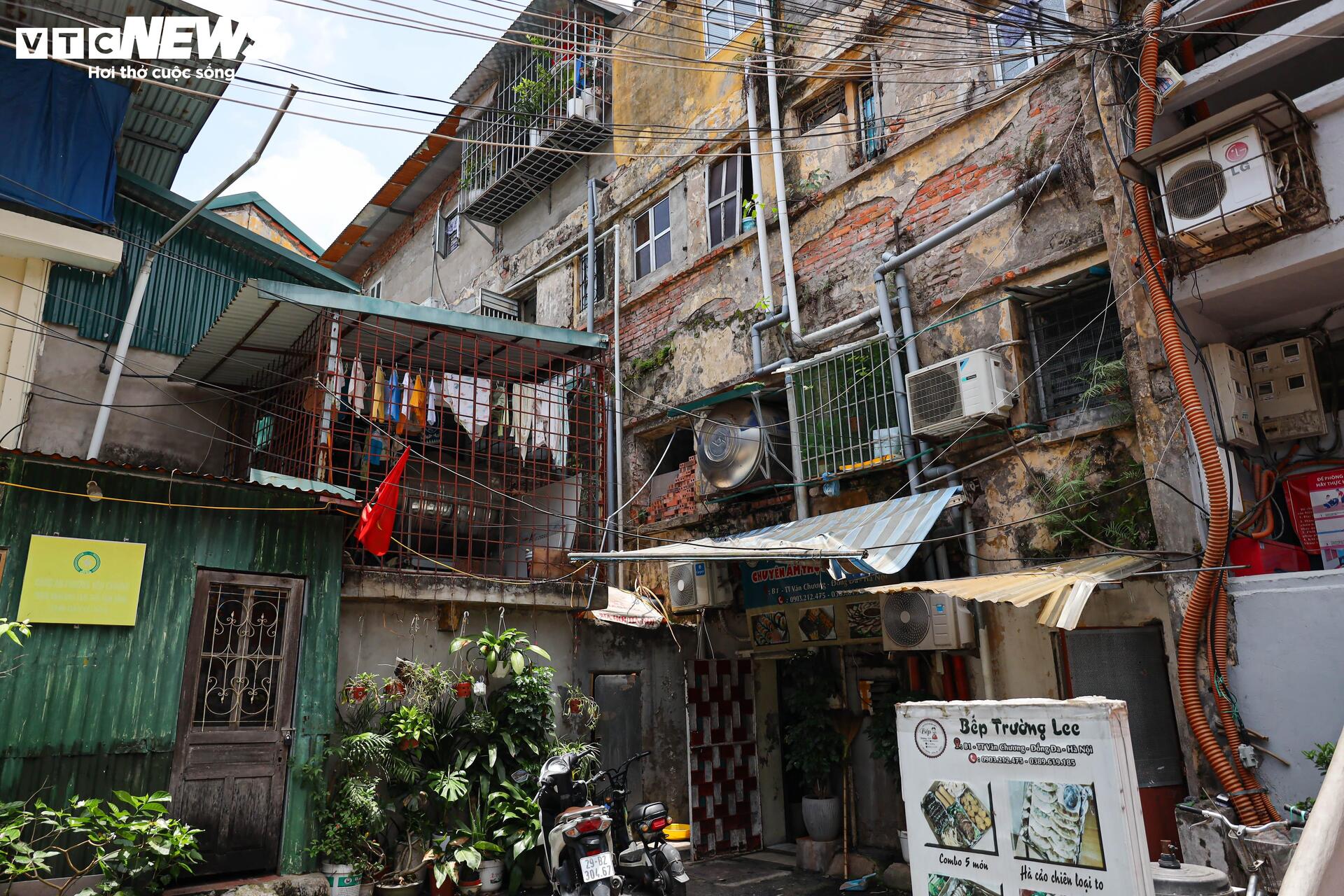
A narrow alleyway in Hanoi’s historic Old Quarter

Dilapidated makeshift corners serve as shared restrooms for local residents.
Clear Ownership Rules and Mandatory Relocation
Participants who receive lottery-free apartments must relocate their entire household from their former residence. They must register their permanent residency at the new address within the city’s specified timeline.
If the previous home was rented state-owned public property, the residents must terminate their lease and hand over the space to municipal housing authorities.
For privately owned properties, the city will enforce measures to ensure the vacated space remains uncrowded. The current submission has not yet released specific handling rules for privately owned homes.
Buyers and tenants cover the costs under standard social housing price frameworks. Purchase prices, lease terms, administrative procedures, and preferential loans follow national social housing laws. The program requires no direct municipal budget expenditure for housing purchases.
Relieving Strain on Historic Core Infrastructure
The municipal administration highlighted severe living conditions across the historic urban center to justify the policy.
A municipal survey in Hoan Kiem Ward revealed that 902 households, comprising 3,621 residents, endure extreme overcrowding with under 5 square meters of floor space per capita. Multigenerational families averaging four members share spaces smaller than 20 square meters, far below Hanoi’s citywide average.
Authorities noted that these conditions fail to secure basic living standards and fall short of housing rights under Article 22 of the 2013 Constitution.
The city’s Old Quarter decongestion plan, first drafted in 2013, faced repeated delays due to a shortage of ready housing stock.
Most distressed residents work informal, low-income jobs and cannot afford commercial homes. Strict heritage preservation laws ban extensions or new builds. In addition, shared state leases and co-ownership arrangements prevent families from upgrading their living spaces.
Many multi-family buildings are deteriorating tube houses tucked deep inside narrow alleyways. These corridors lack proper ventilation and fire access routes, with residents sharing kitchens, water sources, and bathrooms.
The proposed policy provides immediate relief for the most vulnerable residents while easing high urban density in the historic core.
The 902 households covered by this proposal fall under the voluntary relocation category. A separate group of 478 households subject to mandatory relocation falls outside the scope of this draft resolution.
Source: kenh14.vn
Discover more from Vietnam Insider
Subscribe to get the latest posts sent to your email.