

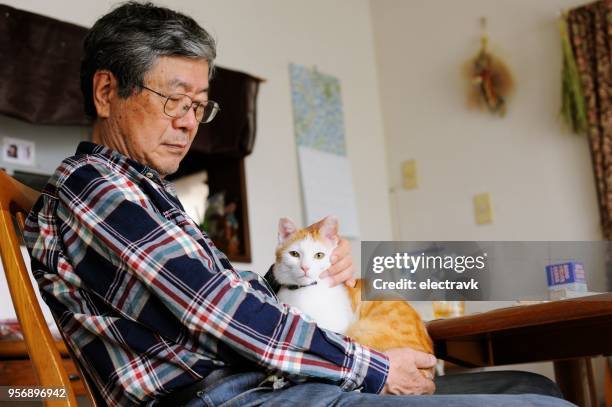
Japan is home to nearly 16 million domesticated dogs and cats—surpassing the country’s population of children under 15. This phenomenon mirrors deep demographic disruptions: protracted declining birthrates, shrinking family units, escalating child-rearing expenses, and the relentless pressures of metropolitan existence.
Yet the innate human yearning for emotional connection has not withered.
In that hollowed-out space, companion animals—cats in particular—emerge as an ideal emotional fit: intimate, steady, and undemanding. According to research by Professor Katsuhiro Miyamoto of Kansai University, this “cat economy,” or catnomics, is projected to generate roughly 3 trillion yen (around 19 billion USD) for Japan in 2026. Still, feline commerce represents only the visible crest of a far broader social reality.
The Burgeoning Industry of Emotional Substitutes
Economists have coined a term for this expansive commercial terrain: the loneliness economy. It encompasses every commodity and platform engineered to bridge human separation: matchmaking apps, remote teletherapy portals, companionship-for-hire agencies across Japan and South Korea, and conversational AI companions. The AI companion market alone was valued at 37 billion USD in 2025 and is projected by Precedence Research to hit 552 billion USD by 2035.
Isolation has evolved into a dual economic force, producing staggering social overhead while simultaneously driving immense commercial revenues. The two realities sustain each other in a closed loop.
The deeper concern lies in how society reacts to this shift. Pervasive solitude is no longer treated merely as an unintended byproduct of modernization. The modern market has adapted to monetize disconnection, turning human detachment into a reliable consumer baseline.
Vietnam offers clear evidence of this urban transition. The urban population grew at an annual rate of 3.06% from 2019 to 2024, half again as fast as the preceding period. In 2024, the national total fertility rate dropped to a historic low of 1.91 children per woman. Citizens are clustering into metropolises at unprecedented rates. Yet the organic architecture of community life—accessible civic squares, tight neighborhood networks, and informal community anchors—has lagged far behind. Urban density draws bodies closer geographically while driving them further apart emotionally.
Across high-rise developments in Hanoi and Ho Chi Minh City, residents rarely know their immediate neighbors. An entire generation is coming of age in packed high-rises devoid of the default social ties that once sustained traditional alleyways and older collective residential blocks. For many young urbanites, particularly Gen Z, dating platforms have quietly replaced civic gathering spaces. People use them to seek romance, but also to find casual conversation, visibility, or simply a glowing screen to wind down the night.

Systemic Isolation as a Public Health Crisis
This estrangement spans far beyond national borders. The World Health Organization confirmed in 2025 that one in six people worldwide experiences persistent loneliness. The United Kingdom appointed a Minister for Loneliness in 2018 after reports showed more than 9 million citizens felt chronically isolated. Japan instituted a similar ministerial post in 2021 following the first rise in national suicide figures in over a decade. These public offices are not tasked with comforting individual sorrow; they coordinate systemic public policy to treat chronic isolation as an urgent societal and public health challenge.
Formalizing the problem as the UK and Japan have done marks critical progress. Many global initiatives still rely heavily on supplemental support programs, which simply layer on more paid services.
Such measures can soothe immediate emotional distress, yet they rarely touch the deeper roots: fractured historical communities, fragmented workdays, and living setups that discourage lasting bonds.
Here lies the fundamental paradox: an industry that monetizes solitude has little incentive to cure it. Its business model requires managing symptoms just enough to keep consumers returning to the checkout counter. Professional counseling, community hubs for migrant workers, and eldercare services offer undeniable value. Yet the prevailing corporate framework prioritizes user retention over human resolution. The moment genuine human connection is cataloged as a billable item on an invoice, social life shifts onto perilous ground.

Reclaiming Bonds Beyond the Checkout Counter
Are we willing to seek out the things that cannot be packaged or sold?
Modern psychological research offers a clarifying insight: profound isolation rarely begins with a lack of surrounding people. It starts with self-alienation—losing touch with our own interior needs, emotions, and aspirations beyond algorithmic recommendations. Adding another app or attending another superficial meetup merely multiplies interactions; it does not build authentic communion.
The moments that cultivate enduring relationships carry no commercial barcodes. They live in quiet shared meals free from glowing phone screens, unrecorded personal stories shared without an audience, and calm pauses spent sitting together without needing digital entertainment. No corporate entity gains financially by prompting us toward those quiet spaces. For that precise reason, no algorithmic feed will ever recommend them.
The four-legged pet coats flying off retail shelves in Tokyo are not popular because of an eccentric subculture. The market is simply performing its assigned function: locating the emotional vacuums carved out by modern life and converting them into consumer stock-keeping units.
We must ask whether humanity is letting isolation become the easiest desire to fulfill simply because it carries a retail price tag, while neglecting the unmonetized practices that actually bring us together.
Source: vnexpress.net
Discover more from Vietnam Insider
Subscribe to get the latest posts sent to your email.