

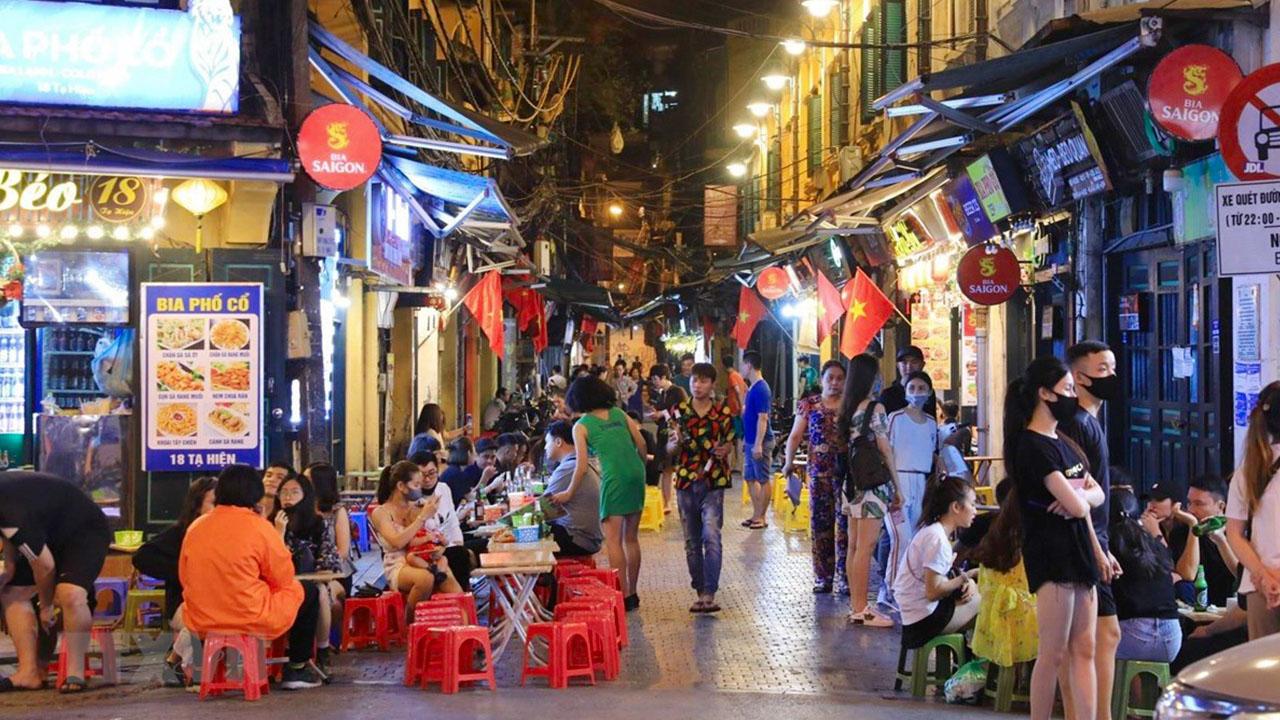
Hanoi’s Old Quarter is once again proving why it remains the heart of Vietnam’s culinary identity, as global recognition for the capital’s street food scene continues to rise.
From steaming bowls of pho served on low plastic stools to Michelin-recognized restaurants redefining local cuisine, the district offers a rare mix of tradition and modern dining that few cities in Asia can match. Last year, British magazine Time Out ranked Hanoi as the second-best street food city in Asia, placing it ahead of both Singapore and Bangkok.
For international visitors, the Old Quarter is more than a tourist destination. It is where Vietnam’s food culture has been built, preserved, and constantly reinvented for more than 1,000 years.
As night falls, the transformation begins.
Daytime shopkeepers close their storefronts, while street vendors wheel out metal carts, plastic stools, and giant pots of simmering broth. Pavements become open-air kitchens, and narrow streets fill with diners waiting for fresh noodles, grilled meats, and late-night snacks.
Michelin Guide describes the experience as something that feels almost untouched by time, where the rhythm of daily life looks much the same as it did decades ago.
According to food historian Trinh Khanh Linh, the Old Quarter has existed since around the year 1000 and has always served as Hanoi’s main trading center.
“People came here from across Vietnam and from other countries, including many Chinese migrants in the 17th century,” Linh explained.
That history is still reflected in the street names. Hang Bac was once known for silversmiths, Thuoc Bac for traditional medicine, Hang Thiec for metalworkers, and Hang Chieu for woven mats.
Today, many of those same streets are known less for trade and more for food.
Cookbook author Andrea Nguyen told Michelin Guide that much of Hanoi’s culinary history is hidden in these names. Streets such as Hang Khoai, once associated with root vegetables, naturally became places where vendors sold boiled sweet potatoes, cassava, and taro.
As trade expanded, food followed.
Competition among vendors helped shape some of Vietnam’s most iconic dishes. Chinese culinary influence introduced noodles, which later became central to northern Vietnamese cuisine. French colonial rule in the late 19th century added another layer, bringing new ingredients and cooking techniques.
Pho became the clearest result of that cultural blending.
Widely considered Vietnam’s national dish, pho combines Chinese noodle traditions, local herbs and broth techniques, and French influence through beef-based stock preparation.
Chef Charles Degrendele of Michelin-selected Le Beaulieu said Vietnam adapted French cuisine to local tastes rather than simply copying it.
Opened in 1901, Le Beaulieu became one of Hanoi’s earliest fine dining institutions and helped shape the city’s evolving restaurant scene. Degrendele noted that over the past century, many Vietnamese and international chefs trained there before opening restaurants of their own.
For much of the 20th century, dining out in Hanoi usually meant choosing between street food and hotel restaurants, with few options in between.
That began to change in the 1990s as Vietnam opened its economy and private restaurants started expanding rapidly.
The Old Quarter led that shift.
Long Nguyen, who grew up around his family’s Michelin-selected restaurant Hanoi Garden, said restaurants were still rare outside hotels during that period. His strongest memories are of simple breakfasts on cold Hanoi mornings, sitting on wooden benches in the street.
For him, those everyday meals define Vietnamese cuisine more than luxury dining ever could.
Many Old Quarter eateries have now served the same neighborhoods for more than 30 years, often using recipes that remain unchanged. Their reputation depends entirely on local trust, where residents return only if quality stays consistent.
Chef Truong Quang Dung of Chapter restaurant believes that same foundation allows younger chefs to innovate without losing authenticity.
Using local ingredients such as corn and eel, he creates refined dishes designed for international diners while keeping traditional Vietnamese flavors at the center.
He said the Old Quarter remains a demanding place where only good food survives.
“The residents here are proud of their food,” he said. “For those seeking authenticity, this is where it can be found.”
That balance between preservation and reinvention is helping Hanoi strengthen its global food reputation.
With Michelin recognition, rising international tourism, and a street food culture still rooted in daily life, Hanoi’s Old Quarter continues to stand out as Vietnam’s most important culinary destination—and one of Asia’s most compelling places to eat.
Discover more from Vietnam Insider
Subscribe to get the latest posts sent to your email.