

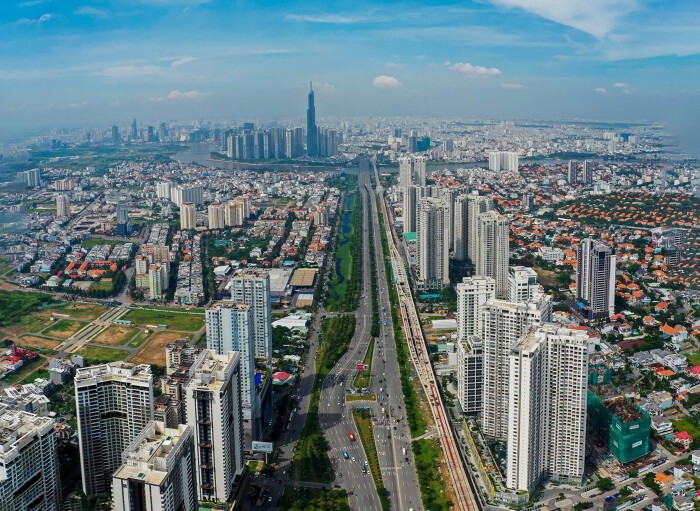
Vietnam is gaining stronger global attention as both Ho Chi Minh City and Hanoi have been ranked among the world’s five fastest-growing cities through 2035, according to the latest Growth Hubs Index by global property consultancy Savills.
Ho Chi Minh City secured the No. 2 position worldwide, while Hanoi ranked fifth, placing both Vietnamese megacities ahead of many established urban centers and reinforcing Vietnam’s rising role in Asia’s economic transformation.
The ranking, which assessed 245 cities globally, identifies future “growth hubs” expected to lead economic expansion over the next decade. Savills highlighted Asia as the main driver of global urban growth, supported by rapid urbanization, young populations, and major shifts in global manufacturing supply chains.
For Vietnam, the results signal more than just strong GDP growth. They reflect the country’s growing importance as an investment destination for multinational companies, manufacturers, and global capital looking for alternatives in Asia.
According to Chris Marriott, CEO of Savills Southeast Asia, the region’s youthful population is creating strong momentum for long-term economic expansion.
A growing labor force, rising consumer demand, and faster urbanization are increasing pressure and opportunity across real estate sectors, from industrial parks and logistics hubs to residential towers and mixed-use developments.
At the same time, the “China + 1” strategy continues to accelerate the relocation of manufacturing operations to Southeast Asia, with Vietnam emerging as one of the strongest beneficiaries.
As companies diversify production beyond China, Vietnam has attracted a steady flow of foreign direct investment, particularly into manufacturing. That capital is creating major spillover effects in real estate markets, especially in Ho Chi Minh City and Hanoi, which remain the country’s largest centers for infrastructure, labor, and consumer demand.
Neil MacGregor, CEO of Savills Vietnam, said the country has all the fundamentals needed to sustain high growth, including infrastructure development, foreign investment, and rising domestic demand.
However, Savills warned that rapid expansion alone does not guarantee long-term competitiveness.
Cities must also prove resilience.
That includes strong economic fundamentals, technology ecosystems, ESG standards, quality of life, and the ability to execute development strategies effectively. In this area, established global leaders such as New York, Tokyo, London, and Seoul continue to lead by balancing growth with livability and long-term planning.
For Vietnam, infrastructure remains the most critical foundation.
The country currently has around 234 major infrastructure projects underway, representing an estimated VND3.4 quadrillion, or roughly US$129 billion, in total investment.
Major projects including Long Thanh International Airport, metro systems in Hanoi and Ho Chi Minh City, and more than 380 kilometers of newly operational North–South Expressway sections are helping create new economic corridors across the country.
These projects are not only improving transport connections but also reshaping urban development patterns.
Areas surrounding both Hanoi and Ho Chi Minh City are emerging as new investment zones, while industrial real estate is benefiting directly from the rise of integrated manufacturing and logistics ecosystems.
At the same time, so-called “soft infrastructure” is becoming increasingly important.
Factors such as education, healthcare, environmental quality, and overall living standards are playing a bigger role in decisions made by businesses and highly skilled workers choosing where to invest and relocate.
As Asia continues to become the center of global growth, Vietnam is pushing for double-digit economic expansion backed by infrastructure spending and strong FDI inflows.
But experts say the real challenge will be execution.
Project timelines, legal reforms, financing conditions, and administrative efficiency will ultimately determine whether Vietnam can convert its growth potential into sustainable long-term competitiveness.
With strong macroeconomic stability, continued urbanization, and resilient foreign investment, both Ho Chi Minh City and Hanoi appear well positioned to remain among Asia’s most important growth stories in the decade ahead.
Discover more from Vietnam Insider
Subscribe to get the latest posts sent to your email.