

Vietnam’s interior furnishings sector serves a wide range of residential, hospitality, and commercial applications. Products such as curtains, window coverings, upholstery fabrics, carpets, and decorative wall materials must meet different requirements depending on where and how they are used.
For businesses purchasing these products, appearance is only one consideration. Material performance, durability, maintenance requirements, customization capabilities, and consistency across orders can all influence purchasing decisions. These factors are particularly relevant for hotels, serviced apartments, offices, and retail spaces, where furnishings must meet both design expectations and operational needs.
Product specifications also vary by customer segment. Residential buyers may prioritize colors, textures, and personalized designs, while commercial procurement teams may focus more heavily on long-term performance, ease of maintenance, and supply reliability.
Understanding these differences can help manufacturers, distributors, retailers, and design professionals identify suitable products and evaluate suppliers against specific project requirements.
Key Considerations When Selecting Interior Furnishing Products
The selection of interior furnishings involves more than comparing designs and prices. Different applications require different material properties, installation methods, and maintenance procedures.
1. Material Performance and Durability
For hotels, offices, and other high-use environments, buyers may need to consider abrasion resistance, colorfastness, cleaning requirements, and expected product lifespan. Curtains and upholstery fabrics, for example, may need to meet specific performance requirements depending on their intended use.
Technical specifications should be assessed against the conditions in which a product will be installed and used. Where relevant, buyers can request test reports, product certifications, or supporting documentation rather than relying solely on supplier descriptions.
2. Customization and Project Requirements
Interior projects often require specific dimensions, colors, textures, finishes, or installation systems. Hotels may need consistent materials across multiple rooms, while commercial projects may involve coordinated furnishings across several locations.
Suppliers differ in their ability to accommodate customized orders, develop new materials, and maintain consistency between production batches.
For buyers, important questions include whether a supplier can provide samples, meet required specifications, accommodate revisions, and reproduce approved products in subsequent orders.
3. Cost, Minimum Order Quantities, and Lead Times
Product prices are only one component of the overall purchasing decision. Minimum order quantities (MOQs), tooling or customization costs, packaging, shipping, and installation requirements can affect the total cost of a project.
Lead times also matter, particularly when furnishings must be delivered according to construction schedules or hotel opening dates.
Comparing suppliers against consistent criteria, such as product specifications, order quantities, delivery timelines, and quality requirements, provides a more accurate basis for evaluating their overall value than price alone.
4. Maintenance and Operational Requirements
The practical requirements of a product can vary significantly across applications. Hospitality operators may prioritize ease of cleaning and replacement, while offices and retail spaces may require materials that withstand frequent use.
Window treatments illustrate these considerations. Manual curtains and blinds may suit straightforward applications, whereas motorized systems can offer additional convenience in spaces requiring automated light control.
However, the suitability of an automated system depends on installation conditions, maintenance arrangements, compatibility with existing controls, and the project’s budget.
Evaluating these operational factors early can help buyers avoid selecting products that meet initial design requirements but prove less suitable during everyday use.
Interior Furnishings and Specialized Product Categories
Several product categories bring together decorative and functional requirements, creating different considerations for buyers and suppliers.
Window coverings include curtains, blinds, tracks, motors, and automated shading systems. Buyers may compare light control, privacy, operating mechanisms, installation requirements, and compatibility with building control systems.
Wall coverings range from conventional wallpapers to textile-based decorative surfaces. Relevant considerations include surface preparation, installation methods, durability, cleaning, and suitability for the intended environment.
Upholstery fabrics, carpets, rugs, and other decorative textiles serve residential and commercial applications with varying performance requirements. Depending on the project, buyers may need to assess abrasion resistance, color stability, cleaning methods, and applicable safety standards.
These categories demonstrate why product selection should be based on intended use and technical requirements, rather than design trends alone. The appropriate specifications will depend on the project, its operating conditions, and the expectations of the end user.
Hometex Vietnam 2026: An Upcoming Industry Exhibition

Hometex Vietnam at SECC
Hometex Vietnam 2026 is scheduled to take place on November 19–21, 2026, at the Saigon Exhibition and Convention Center (SECC) in Ho Chi Minh City.
The event marks the first international edition of Hometex Shenzhen, which has nearly 30 years of experience in the home furnishing sector. Organized with the involvement of Informa Markets, the Vietnam edition will focus on window coverings, wall coverings, and soft furnishing solutions.
According to the organizers, the exhibition is expected to feature more than 150 exhibitors across approximately 4,500 square meters of exhibition space, with manufacturers and brands from Vietnam, China, and other Southeast Asian markets.
Product categories are expected to include curtains, blinds, window treatment hardware, wallpapers, textile wall coverings, upholstery fabrics, carpets, rugs, and decorative textiles.
For professionals working in these segments, the exhibition provides an opportunity to explore product offerings and initiate discussions with suppliers. Any purchasing decision, however, will still depend on individual requirements, technical assessments, commercial terms, and supplier verification.
Preparing for Supplier Meetings at Trade Exhibitions
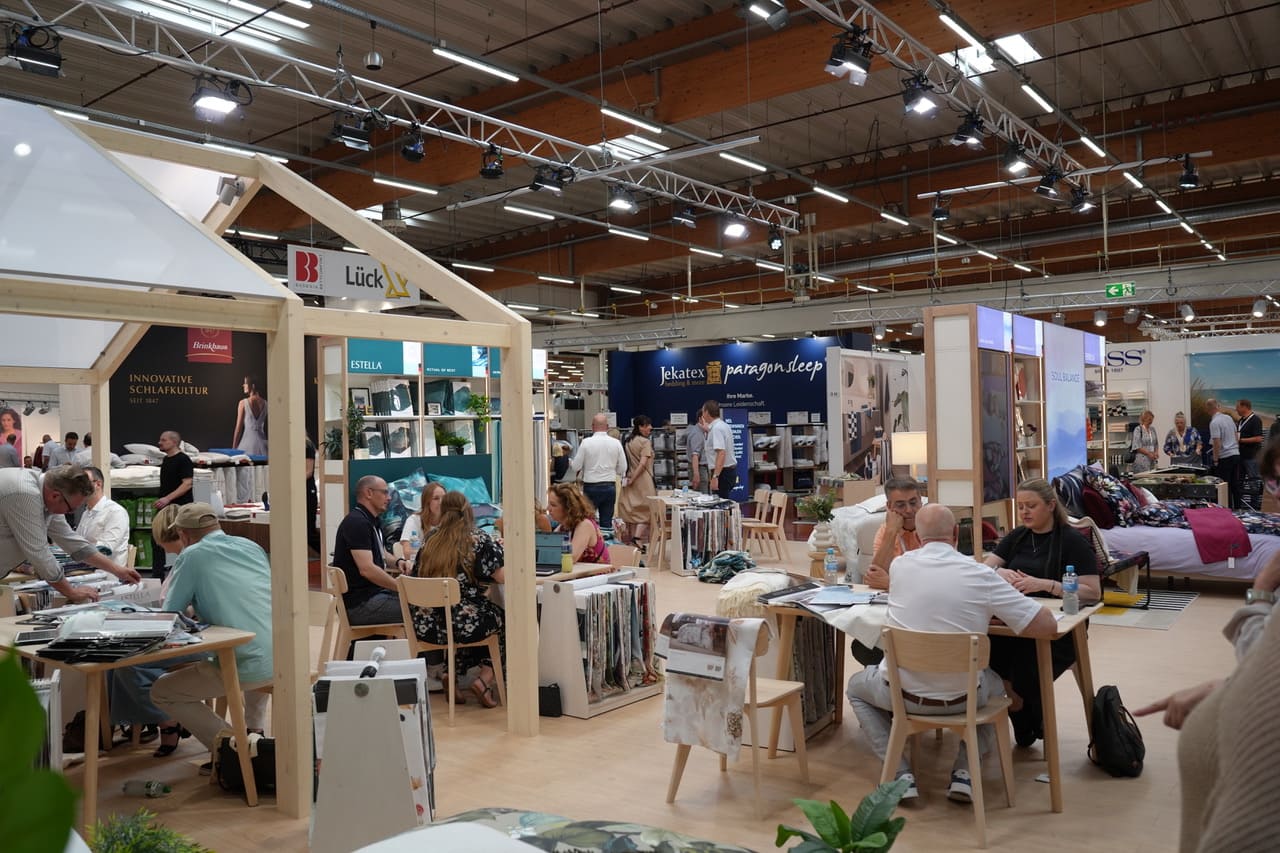
Trade exhibitions can help businesses discover products and establish initial supplier contacts. Turning those contacts into viable commercial relationships requires preparation and follow-up.

Buyer and supplier evaluation process before, during, and after a trade exhibition. Sources: Hometex Vietnam
Before attending, buyers should define their product requirements, estimated order quantities, target price ranges, and expected delivery schedules. Bringing technical specifications, reference images, or material samples can help suppliers understand the project more accurately.
During supplier meetings, businesses can compare manufacturing capabilities, customization options, MOQs, lead times, quality control procedures, and relevant product documentation. Buyers should also clarify which production processes are handled in-house and which are outsourced, where this distinction matters to the project.
After the exhibition, promising contacts can be shortlisted for further assessment. Buyers may request quotations, samples, test reports, and references relevant to their requirements. For larger or technically complex orders, factory visits, sample approval, and pilot production may help verify whether a supplier can meet the required standards.
A structured evaluation process also helps businesses distinguish between an attractive product presentation and a supplier’s ability to deliver consistently.
Conclusion
Selecting interior furnishing products for residential, hospitality, and commercial projects requires a balance between design, technical performance, cost, and operational requirements. Buyers who define these criteria early can compare suppliers more consistently and make better-informed purchasing decisions.
Industry exhibitions are one channel for exploring product categories and initiating supplier discussions, although further evaluation is necessary before committing to an order.
Event Information
- Event: Hometex Vietnam 2026
- Date: November 19–21, 2026
- Opening Hours: 9:00 AM–5:00 PM
- Venue: Hall B1, Saigon Exhibition and Convention Center (SECC), Ho Chi Minh City, Vietnam
Discover more from Vietnam Insider
Subscribe to get the latest posts sent to your email.