

For foreign brands entering Vietnam, appointing a distributor is often seen as the first step toward reaching customers across the country. Yet securing a commercial partner in Ho Chi Minh City or Hanoi does not necessarily mean gaining access to the entire Vietnamese market.
Vietnam’s commercial activity is concentrated around several economic and industrial centers, each supported by its own business networks, logistics infrastructure, and customer base. A distributor with established relationships in one region may have limited sales activity elsewhere, even when it has the logistical ability to deliver products nationwide.
This distinction matters for businesses planning their Vietnam Market Entry. Without a clear understanding of regional distribution patterns, foreign companies risk overestimating their market presence and overlooking potential customers. For international manufacturers, exporters, and B2B brands, building a Vietnam Distribution Network requires more than finding a partner willing to represent their products. It requires understanding where customers operate and whether the chosen distribution structure can actually reach them.
Understanding Vietnam’s North–South Distribution Landscape
Vietnam’s geography has helped shape two major economic and commercial concentrations: the northern region centered around Hanoi and the southern region centered around Ho Chi Minh City.
These areas play important roles in the country’s manufacturing, trade, and logistics activities. According to the World Bank’s Vietnam Development Report 2019, industrial development has historically been concentrated around the two metropolitan regions, supported by industrial parks, transport corridors, and access to international trade gateways.
However, the presence of well-developed commercial centers does not mean that distribution networks operate uniformly across the country.
A business headquartered in Ho Chi Minh City may have warehouses, transportation providers, and customers in several provinces. That infrastructure enables it to supply products beyond its immediate location, but it does not necessarily indicate an active sales organization covering northern Vietnam.
The distinction becomes clearer when separating physical distribution from commercial distribution. Physical distribution concerns the movement of products, including transportation, inventory management, and delivery. Commercial distribution involves identifying customers, developing relationships, presenting products, negotiating orders, and providing ongoing account support.A company may be capable of shipping equipment to Hanoi while having no sales representatives or established customer relationships there. For foreign brands, this creates an important difference between having products available in Vietnam and having an effective presence in the country’s regional markets.
Vietnam’s Ministry of Industry and Trade has also identified uneven logistics development and infrastructure connectivity as continuing challenges. Warehousing and transportation capacity remain concentrated around major commercial locations, including Hanoi, Hai Phong, and Ho Chi Minh City.
These conditions reinforce the need to examine distribution capabilities at a regional level rather than assuming that one established partner can serve every market equally.
These differences between geographic reach and actual sales coverage are also discussed in the following interview, where market-entry specialists explain why foreign brands should look beyond a distributor’s location and assess its ability to develop customers across Vietnam.
How Northern and Southern Vietnam Differ as Business Markets
The distribution challenge becomes easier to understand when examining the commercial environments in which local partners operate. Northern and southern Vietnam both have established industrial and business ecosystems, but their customer concentrations, supply chains, and regional connections are not identical. For foreign suppliers, these differences can influence where demand is located and which types of distributors are best positioned to reach it.
Northern Vietnam’s Industrial and Commercial Landscape
Hanoi serves as a major administrative, commercial, and service center, while surrounding industrial areas support manufacturing activities across sectors such as electronics, electrical equipment, and industrial components.
Hai Phong provides an important connection between northern industrial production and international shipping. Other manufacturing locations, including Bac Ninh and Hung Yen, contribute to the wider northern industrial ecosystem.
The National Statistics Office reported industrial production growth in several northern localities during 2025, including Bac Ninh and Hai Phong. These figures indicate ongoing industrial activity, although they should not be interpreted as direct measures of demand for any particular imported product.
For foreign B2B suppliers, the commercial relevance depends heavily on the industries they serve. A manufacturer of electronic production equipment may find opportunities among factories and industrial suppliers in northern industrial clusters. A company selling specialized maintenance systems may instead need distributors with technical relationships across manufacturing facilities. In both cases, having an office in Hanoi is not sufficient evidence of market access.
What matters is whether the distributor has relevant customer relationships, understands the product’s applications, and can regularly support buyers in the locations where they operate.
Southern Vietnam’s Distribution and Business Ecosystem
Southern Vietnam has a broad commercial ecosystem centered around Ho Chi Minh City and its connections with neighboring industrial and logistics areas. Following Vietnam’s administrative restructuring in July 2025, the former Ho Chi Minh City, Binh Duong, and Ba Ria–Vung Tau were consolidated into an expanded Ho Chi Minh City. This brought major commercial, manufacturing, and port activities within one administrative jurisdiction.
The region includes importers, industrial suppliers, logistics operators, and businesses serving both domestic and international markets. For foreign brands, these conditions can provide access to multiple categories of commercial partners, from general trading companies to specialized distributors serving industrial customers.
Yet southern Vietnam should not be treated as a single customer territory either. A distributor serving established accounts in central Ho Chi Minh City may have little involvement with manufacturers in more distant industrial locations. Its ability to deliver products to those locations does not automatically mean it has the sales resources to develop new customers there. The same principle applies to both regions: distribution strength is usually more meaningful when measured against specific customer segments and locations than against broad geographic claims.
Regional differences also extend beyond the North–South comparison. Central Vietnam, including commercial and industrial areas around Da Nang, may require separate consideration depending on the product category and customer base.

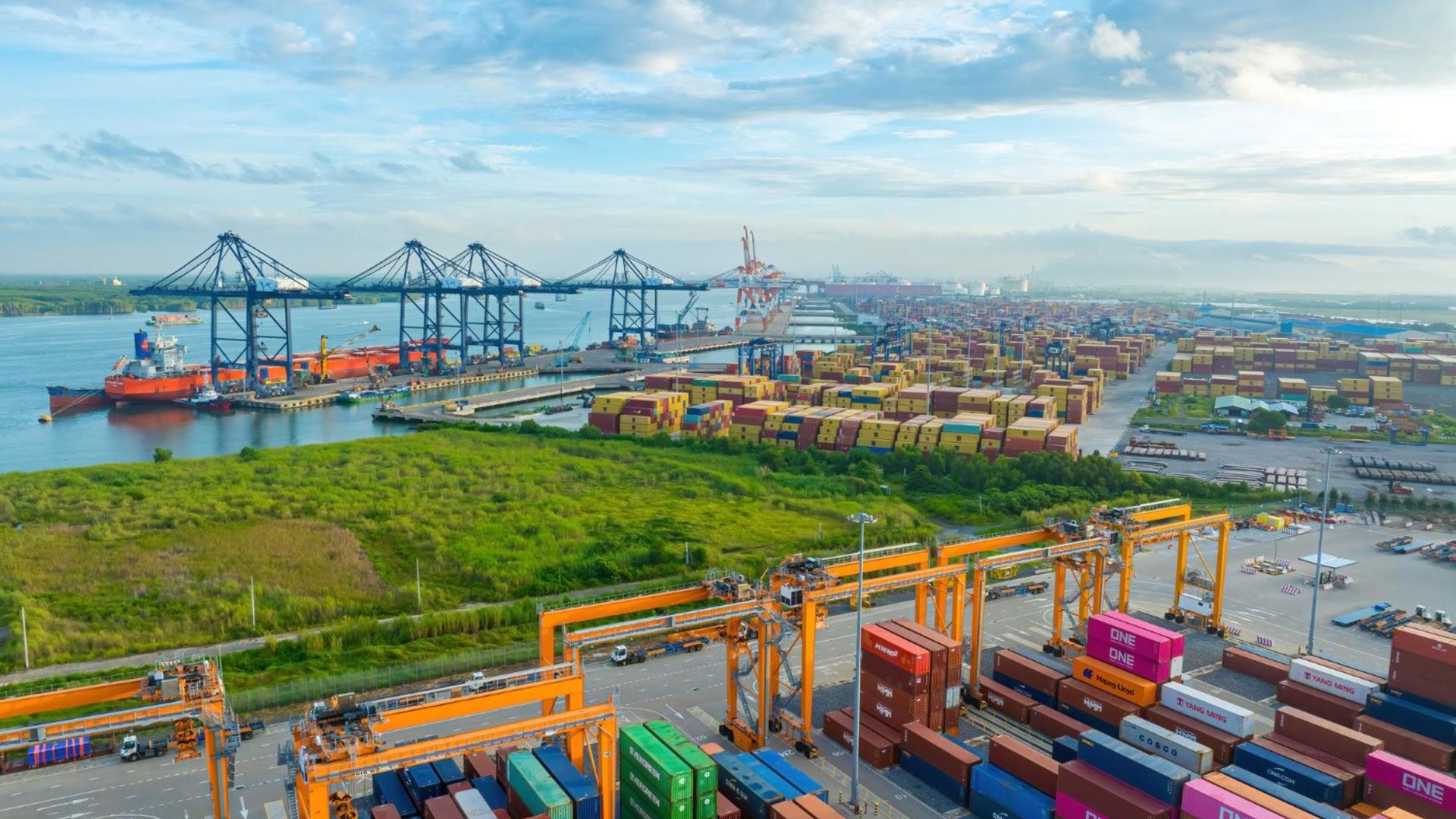
Maritime operations form part of the infrastructure supporting Vietnam’s industrial and commercial supply chains. Source: from MoveToAsia
Related Article: Investment Opportunities in Vietnam’s Wastewater Sector
What Limited Regional Coverage Means for Foreign Brands
Regional distribution gaps become a business problem when a foreign company mistakes its partner’s existing customer network for broader market coverage. A distributor may perform well with familiar customers while generating little demand outside those relationships. From the supplier’s perspective, this can create an incomplete picture of the market and its sales potential.
Missed Sales Opportunities Beyond Established Territories
Consider a European machinery manufacturer that appoints a distributor based in Ho Chi Minh City. The distributor already supplies equipment to several local manufacturers and has the technical knowledge required to represent the new brand. Initial sales may develop through these established accounts. However, if the distributor rarely approaches companies in northern Vietnam, the foreign manufacturer may receive few inquiries from factories operating there.
Over time, the brand could conclude that demand is concentrated in the South, even though the absence of northern sales may reflect limited commercial outreach rather than limited market demand. This is an important distinction for business planning.
Sales performance indicates what a distribution network has achieved under its existing operating conditions. It does not necessarily reveal the full size or geographic distribution of potential demand.
The same issue can arise within a region. A distributor may have strong relationships in one industry but limited access to adjacent customer segments.
Foreign suppliers therefore need to distinguish between a market with little commercial potential and a market that their existing partner has not actively developed.
Challenges in Customer Service and Market Visibility
Limited regional coverage can also affect what happens after a sale. For industrial machinery, technical components, or equipment requiring installation, customer relationships often continue beyond the original purchase. Buyers may expect assistance with commissioning, maintenance, spare parts, troubleshooting, or future upgrades.
If the distributor lacks local technical resources, these activities may require additional travel, subcontracted services, or direct intervention from the foreign manufacturer.
This can influence purchasing decisions, particularly where equipment downtime has a direct financial impact on the customer. Another concern is the quality of market information reaching the foreign supplier.
When most customer interactions come from one region, feedback on pricing, product suitability, competing brands, and purchasing requirements may reflect only that part of the market. A manufacturer receiving limited inquiries from the North, for example, may struggle to determine whether the issue is pricing, competition, product specifications, or simply insufficient sales activity.
Without regional visibility, commercial decisions risk being based on incomplete evidence. For companies evaluating Vietnam Market Expansion, this can affect everything from sales forecasts to inventory planning and future investment in local operations.
Distribution Models for Reaching Vietnam’s Regional Markets
Recognizing regional differences does not mean every foreign company needs separate distributors in northern, central, and southern Vietnam. The appropriate structure depends on the location of target customers, the complexity of the product, the frequency of purchases, and the level of support buyers require.
Some businesses may be effectively served by a single nationwide partner. Others may achieve better commercial coverage through regional distributors or a combination of local sales and distribution arrangements.
Working With Multiple Regional Distributors
A regional distribution structure allows foreign brands to work with partners that already understand particular customer groups and commercial territories.
For example, an equipment supplier could appoint one distributor serving industrial customers in northern Vietnam and another focused on the southern market. Each partner would be responsible for developing sales within an agreed territory, using its existing relationships and local commercial resources.
This approach can reduce dependence on one company’s ability or willingness to develop customers nationwide. It also allows the foreign brand to compare commercial activity across regions, provided performance is measured consistently.
However, working with multiple distributors introduces coordination requirements. Companies need to define territory boundaries, clarify responsibility for customers operating in several regions, and establish procedures for handling inquiries that cross those boundaries.
Pricing, technical support, warranties, and brand communication may also require closer coordination. A poorly managed regional model can create competing offers or confusion over which distributor is responsible for a particular account. The value of regional distribution therefore lies not simply in having more partners, but in establishing a structure where each partner has a clear commercial role.
Combining Distributors With Local Sales Representatives
For some foreign companies, traditional distribution may not provide enough direct contact with customers. This is particularly relevant for products involving complex technical specifications, engineering discussions, or long project-development cycles.
An industrial equipment manufacturer selling standardized machines may be able to rely largely on a distributor that manages inventory, customer relationships, and after-sales support. By contrast, a supplier involved in customized production systems, wastewater treatment projects, or industrial engineering solutions may need more direct participation in technical discussions.
In these situations, a local sales representative can support customer development, coordinate meetings, follow up on quotations, and maintain communication between the Vietnamese buyer and the overseas manufacturer.
The representative does not necessarily replace the distributor. The two functions can complement each other. A distributor may handle importing, invoicing, delivery, and local service, while a dedicated representative focuses on identifying projects and developing relationships with potential customers.
The foreign brand may also need to remain involved in technical training, marketing materials, product positioning, and major commercial negotiations.
These responsibilities should reflect the actual capabilities of the Vietnam Business Partners involved rather than assumptions about what a distributor normally provides.
For B2B companies, the choice between these models is ultimately an operational decision: how much local customer engagement is required, and who is best equipped to provide it?
Conclusion
For foreign brands, the objective is not necessarily to build an equally extensive sales network in every part of Vietnam. It is to establish reliable access to the regions where relevant customers operate.
A company supplying equipment to a concentrated industrial sector may need only a few well-positioned commercial partners. Another serving customers across multiple industries and provinces may require a broader network. The starting point should therefore be customer geography and the level of commercial support needed, rather than an assumption that appointing one distributor creates nationwide coverage.
A practical Vietnam Market Entry Strategy should distinguish between where a partner can deliver products, where it actively sells, and where it has the resources to develop future business.
That distinction can help foreign companies make better distribution decisions, allocate resources more effectively, and build a market presence that reflects actual customer demand rather than geographic claims.
Discover more from Vietnam Insider
Subscribe to get the latest posts sent to your email.