

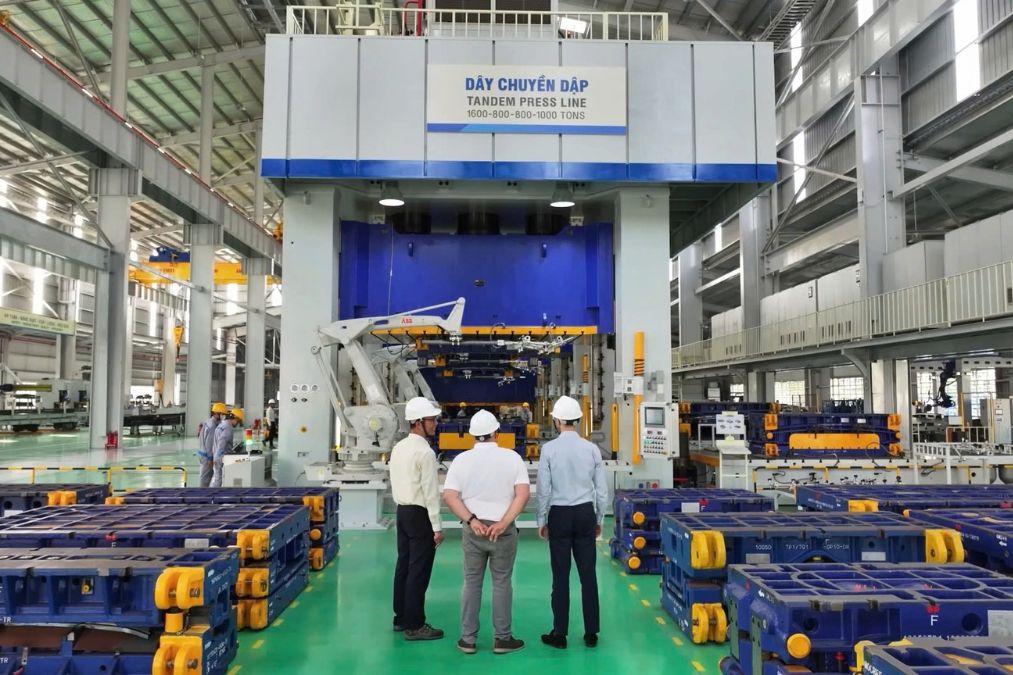
For decades, foreign direct investment (FDI) has played an important role in Vietnam’s economic development. Foreign-invested companies have contributed to manufacturing capacity, exports, employment, technology adoption, and Vietnam’s integration into global supply chains.
FDI will remain an important part of Vietnam’s economic development. What is changing is the emphasis on the value that investment creates for the wider economy.
In June 2026, the Politburo issued Resolution 10-NQ/TW on the development of the foreign-invested economic sector. The resolution sets a clearer direction for attracting investment that brings technology, knowledge, skills, higher value added, and stronger links with Vietnamese businesses. It also aims to position Vietnam as a competitive destination for high-quality, medium- and long-term foreign investment.
The shift can be summarized simply: Vietnam is moving from a primary focus on attracting more FDI towards attracting investment that creates greater economic value and strengthens domestic capabilities.
1. What Is Changing in Vietnam’s FDI Priorities?
Vietnam’s earlier FDI strategy helped establish the country as a competitive manufacturing base. Processing and manufacturing continue to account for a large share of new FDI. In the first four months of 2026, the sector attracted US$8.12 billion in newly registered capital, accounting for 66.8% of the total newly registered capital during the period.
However, Vietnam’s next stage of development requires more than capital and production capacity.
Resolution 10 identifies several areas for improvement, including the relatively high share of labor-, resource-, land-, and energy-intensive projects, as well as processing and assembly activities. It also points to relatively low localization and domestic value added, limited connections between foreign-invested and domestic companies, and insufficient technology transfer.
This does not mean Vietnam is moving away from manufacturing or becoming less open to foreign investors. Rather, the policy direction places greater emphasis on the quality, efficiency, and long-term contribution of investment.
The question is increasingly not only how much capital a project brings, but also what capabilities, technology, skills, and local economic links it can develop in Vietnam.
For further insights, watch this discussion between Guillaume Rondan, CEO & Co-Founder of FVSource, and Vlad Savin, Director, Growth & Partnerships of Acclime Vietnam on market entry options and how companies can approach business and manufacturing opportunities in Vietnam.
2. What Does “Higher-Value FDI” Mean?
Higher-value FDI is not limited to investment in high-tech industries. It can also involve upgrading existing manufacturing operations, strengthening local supplier networks, developing skilled employees, and carrying out more sophisticated activities within Vietnam.
Technology and innovation
Vietnam is placing greater emphasis on investment involving advanced technologies, innovation, research and development (R&D), and technology transfer. In 2026, the government issued a list of 70 priority high technologies, covering areas such as artificial intelligence, big data, cloud computing, the Internet of Things, quantum technology, renewable energy, and advanced energy storage.
For foreign companies, this creates opportunities beyond traditional manufacturing. Projects involving engineering, product development, technical services, digital technologies, and R&D can contribute to the development of capabilities that extend beyond production itself.
For investors, the relevant question is not simply whether a project uses advanced technology, but also whether it can develop technical expertise, improve productivity, or support more complex activities in Vietnam.
Stronger local supply chains
Another priority is stronger integration between foreign-invested companies and Vietnamese businesses.
Rather than operating as isolated production sites, foreign-invested companies can contribute more to the domestic economy by developing local supplier relationships, transferring technical knowledge, and increasing the participation of Vietnamese companies in global value chains.
This is particularly relevant to manufacturing. The ability to source components, materials, services, and technical inputs locally can determine how deeply an investment becomes integrated into the Vietnamese industrial ecosystem.
Stronger local sourcing can also improve operational resilience, although the feasibility depends on supplier capabilities, technical requirements, cost, quality, and production scale.
Higher domestic value added
Vietnam is also looking to increase the value generated within the country.
This can involve moving beyond basic assembly towards activities such as engineering, product development, quality management, R&D, technical services, and more advanced manufacturing processes.
The objective is not simply to increase the volume of production in Vietnam, but to increase the range and sophistication of activities carried out there.
For a manufacturer, this may mean developing local engineering capabilities, working with suppliers on product improvements, or expanding the responsibilities of a Vietnamese operation over time. These developments can increase the value created locally without requiring every project to follow the same upgrading path.

Developing local engineering and quality-control capabilities can help increase the value generated by manufacturing in Vietnam.
>> Related article: Why Foreigners Fail at Doing Business in Vietnam: Six Common Pitfalls to Avoid
Human capital
Workforce development is another part of this transition. Investment that contributes to technical training, knowledge transfer, and the development of skilled employees can create benefits that extend beyond an individual project.
Taken together, these priorities point to a broader definition of successful FDI: investment that strengthens not only production capacity, but also the skills, technologies, supplier relationships, and industrial capabilities surrounding that production.
3. Why Is Vietnam Making This Shift?
Several factors are shaping Vietnam’s changing FDI strategy.
Moving further up the value chain
Vietnam has developed a substantial manufacturing base, but the government has identified the need to increase domestic value added, improve local linkages, and strengthen technological capabilities.
Attracting more sophisticated activities can help Vietnam participate in global production networks in areas where technical capability and knowledge are increasingly important.
The challenge is to translate manufacturing growth into deeper industrial capabilities, allowing more knowledge, technical expertise, and supporting activities to develop within the domestic economy.
Global supply chains are being reorganized
International companies are also reassessing where they manufacture, source components, and build production capacity.
Vietnam has benefited from broader supply-chain diversification, including China+1 strategies. At the same time, competition among manufacturing destinations is increasing.
As a result, cost competitiveness alone may not determine where companies establish or expand operations. Supplier capabilities, infrastructure, workforce skills, quality standards, logistics, and the ability to scale production can all influence the long-term viability of an investment.
For companies pursuing China+1 strategies, establishing a presence in Vietnam is only one part of the decision. The next challenge is determining which production processes can be transferred, which components can be sourced locally, and whether the supplier base can meet requirements for quality, lead times, compliance, and scale.
Technology is changing investment requirements
Advanced manufacturing, artificial intelligence, semiconductors, digital technologies, and green technologies require different capabilities from traditional labor-intensive production.
Vietnam’s recent policy direction increasingly reflects this change. The amended Law on Technology Transfer, effective from April 2026, also updates the legal framework governing technology transfer and related innovation activities.
These developments reinforce the importance of aligning investment decisions with the capabilities a project needs today and the technological requirements it may face in the future.
Together, these factors are encouraging Vietnam to connect FDI more closely with industrial upgrading, technological development, and participation in higher-value global supply chains.

4. What Does This Mean for Foreign Investors?
For foreign companies considering Vietnam, the changing FDI strategy does not mean that cost is no longer important. Competitive labor and operating costs remain part of Vietnam’s manufacturing appeal.
However, cost is only one part of the investment equation. The suitability of the local industrial ecosystem can be equally important to a project’s long-term performance.
For a manufacturing project, investors may need to look beyond whether a factory can produce the required volume. They may also need to assess whether local suppliers can meet technical specifications, maintain consistent quality, comply with international standards, and scale alongside future demand.
Supplier qualification therefore becomes an important part of the investment decision.
A company entering Vietnam may initially focus on finding a factory that can meet its current production requirements. Over time, however, the more important question may be whether that supplier can support product development, quality improvement, engineering requirements, and increasing production complexity.
This assessment should go beyond a factory’s stated capabilities. Buyers may need to verify production processes, quality-control systems, technical documentation, equipment, workforce expertise, capacity, and experience serving comparable customers.
The same applies at the ecosystem level.
Investors need to consider not only an individual factory, but also the availability of supporting suppliers, logistics services, skilled labor, infrastructure, and relevant technical capabilities.
This broader assessment can be particularly important for companies pursuing China+1 or wider supply-chain diversification strategies. Vietnam can provide an additional manufacturing base, but its long-term value depends on how well the local ecosystem fits the company’s wider supply-chain requirements.
In this context, supplier selection is not simply a procurement exercise. It can influence quality, scalability, lead times, technical development, and the ability to expand operations over time.
A practical approach is to assess the supplier base against the project’s immediate requirements while identifying gaps that could limit future expansion. Depending on the industry, these gaps may involve component availability, production tolerances, testing capabilities, certifications, engineering support, or the ability to increase output without compromising quality.
The investment question is therefore becoming less about finding the lowest-cost location and more about finding the right operating environment for the business.
5. A Changing Investment Environment
Vietnam’s changing FDI priorities are also reflected in its investment-support framework.
The Investment Law 2025 took effect on March 1, 2026, with certain provisions subject to separate effective dates. The amended Law on Technology Transfer also took effect on April 1, 2026.
These legal developments form part of the wider investment environment, but the specific requirements, incentives, and support mechanisms applicable to a project must be assessed under the relevant legal provisions. They should not be interpreted as imposing a universal localization or R&D requirement on every foreign-invested project.
More broadly, Resolution 10-NQ/TW reinforces the policy direction towards investment that contributes to technology development, stronger domestic linkages, workforce capabilities, and greater value added.
For investors, this means that the business case for a Vietnam project may extend beyond traditional calculations of labor, land, and operating costs.
Depending on the project and the applicable support framework, companies may also need to consider how their investment plans address technology development, employee training, local supplier development, R&D, or digital and green transformation.
The ability to identify these opportunities early can help companies evaluate their investment options more comprehensively and understand which forms of support may be relevant to their projects.
6. Vietnam’s FDI Opportunity Is Entering a New Phase
Vietnam is not stepping away from FDI. It is redefining the role that FDI is expected to play in the economy.
The earlier phase of Vietnam’s FDI development was strongly associated with attracting capital, expanding manufacturing capacity, creating employment, and integrating the country into global production networks.
The next phase places greater emphasis on what comes with that investment: technology, local capabilities, skilled talent, supplier development, innovation, and greater domestic value added.
For foreign companies, this creates a different way to evaluate Vietnam.
Instead of asking only:
“How competitive is Vietnam on cost?”
companies may increasingly need to ask:
“What can we build, source, and develop in Vietnam over the long term?”
That shift matters for both investors and manufacturers. As Vietnam seeks investment that contributes more deeply to the domestic economy, companies entering the market will need to evaluate not only production costs, but also suppliers, technical capabilities, workforce, infrastructure, and opportunities for long-term development.
For companies already operating in Vietnam, the same shift presents an opportunity to review local sourcing strategies, supplier-development plans, workforce capabilities, and the potential to expand into higher-value activities.
Vietnam’s next stage of FDI is not simply about attracting more investment. It is about building more value and stronger capabilities around the investment that comes in.
Discover more from Vietnam Insider
Subscribe to get the latest posts sent to your email.